Introduction
Walk into almost any market in Gombe, Kano, Lagos, or cities across Nigeria, and you will find them creams, soaps, gels, and lotions promising lighter skin, brighter complexion, and “perfect beauty.”
Many of these products contain dangerous substances that are banned or heavily restricted by health authorities around the world.
This article is not about judging anyone who uses skin lightening products. The desire for lighter skin in Nigeria is shaped by complex social, historical, and cultural pressures. This guide is about medical facts what certain ingredients in these products actually do to the body and why so many are considered dangerous by NAFDAC and the World Health Organization.
If you use these products, you deserve to know what you are putting on your skin.
How Common is Skin Bleaching in Nigeria?
Nigeria has one of the highest rates of skin bleaching product use in the world. Studies estimate that between 25% and 77% of Nigerian women use skin lightening products regularly depending on region and population studied. Use is also increasing among men.
Many users do not know what ingredients are inside the products they apply every day.
Labels are often incomplete, misleading, or written in unfamiliar languages. Many dangerous products are sold informally in markets rather than through regulated pharmacies.
The Three Most Dangerous Ingredients
1. Mercury A Toxic Heavy Metal
Mercury is one of the most toxic substances known to medicine.
It is banned in skin care products by both NAFDAC and the WHO, yet it is still found in many creams sold in Nigerian markets.
Mercury may appear under names such as:
- Mercurous chloride
- Calomel
- Mercuric
- Mercurio
Mercury lightens skin by blocking melanin production the pigment that gives skin its natural colour.
What Mercury Does to the Body
- Kidney damage mercury accumulates in the kidneys and may cause progressive kidney failure
- Neurological damage tremors, numbness, memory problems, mood changes, and severe nervous system injury
- Skin damage thinning, irritation, sensitivity, and bluish-grey discolouration that may become permanent
- Harm during pregnancy mercury crosses the placenta and can damage a developing baby’s brain
- Second-hand exposure vapour from creams can expose children and other household members
2. Hydroquinone Legal in Small Amounts, Dangerous When Misused
Hydroquinone is a medically recognised skin-lightening ingredient.
In Nigeria:
- OTC products should not exceed 2% hydroquinone
- Stronger concentrations require medical supervision
However, many market products contain illegal concentrations higher than the approved limit.
At Low Concentrations Under Medical Supervision
Hydroquinone may be used safely for conditions such as:
- Melasma
- Post-acne dark spots
- Hyperpigmentation
With Long-Term or High-Concentration Use
It can cause:
- Ochronosis irreversible blue-black skin discolouration, especially on the face
- Increased sun sensitivity much greater UV damage risk
- Severe rebound darkening after stopping the product
Hydroquinone has also been classified as a possible carcinogen with prolonged exposure.
3. High-Potency Steroids The Hidden Ingredient
Many bleaching creams secretly contain powerful corticosteroids such as:
- Betamethasone
- Clobetasol
- Fluocinolone
These medications are meant for serious medical skin conditions and should only be used under professional supervision.
They lighten skin rapidly, which is why they are commonly abused in cosmetic products.
Long-Term Steroid Damage
- Skin thinning (atrophy) skin tears easily even with minor friction
- Stretch marks permanent striae develop on treated areas
- Acne and infections weakened skin becomes vulnerable to bacterial and fungal infections
- Hormonal effects steroids absorb into the bloodstream and may cause Cushing’s syndrome
- High blood sugar especially dangerous for diabetics
- Adrenal suppression the body stops producing enough natural cortisol
- Severe rebound reactions when stopped suddenly
What NAFDAC Says
NAFDAC has repeatedly warned Nigerians about dangerous skin bleaching products and has banned numerous brands containing prohibited substances.
Current regulations require:
- No mercury in cosmetic creams
- Hydroquinone in OTC products must not exceed 2%
- Potent corticosteroids must not be included in cosmetic products
- Cosmetic products must be NAFDAC-registered
If a product has no NAFDAC registration number or the number cannot be verified it should not be used.
The Long-Term Consequences of Skin Bleaching
Beyond internal organ damage, bleaching causes visible and often permanent skin changes:
- Ochronosis (blue-black discolouration)
- Uneven patchy complexion
- Severe rebound hyperpigmentation
- Permanent thinning of the skin
- Visible blood vessels
- Premature ageing and wrinkles
- Increased sensitivity to sunlight
- Higher risk of skin cancer from UV damage
These are not rare side effects. They are documented medical consequences of long-term use.
Safe Skincare for Nigerian Skin
There are safe and evidence-based ways to improve skin health without dangerous bleaching agents.
Safer Options Include:
Sunscreen
One of the most important skincare products available.
- Reduces hyperpigmentation
- Protects against sun damage
- Helps prevent premature ageing
Use SPF 30 or higher daily.
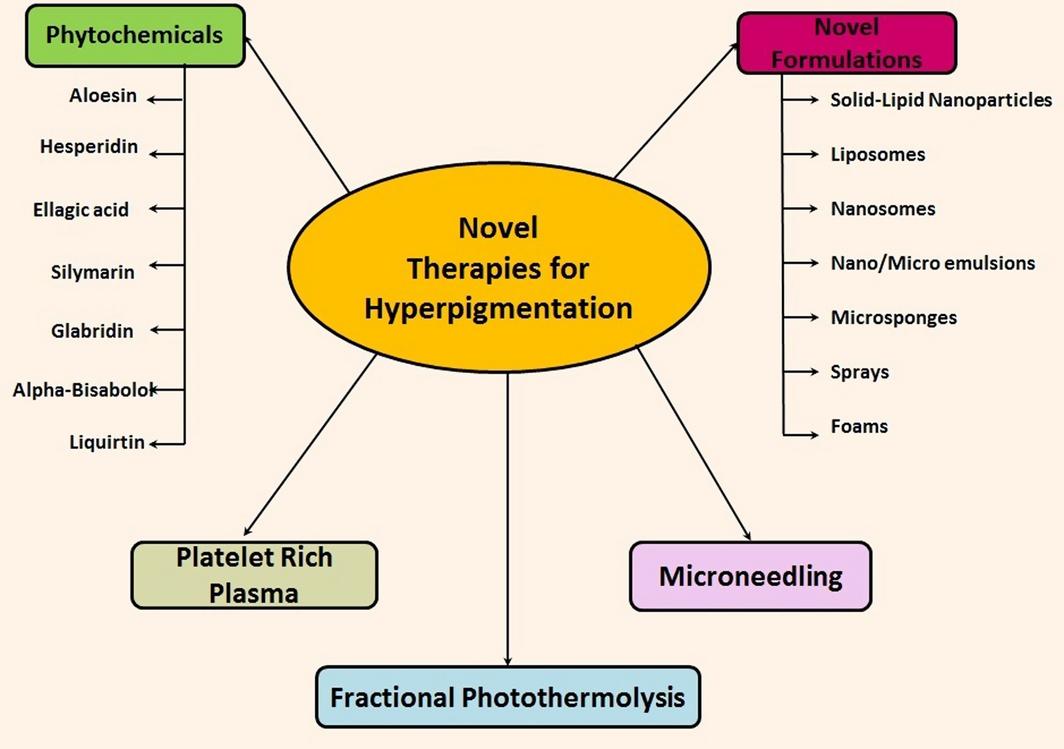
Vitamin C
Helps brighten skin and reduce dark spots safely.
Niacinamide (Vitamin B3)
Improves skin barrier function and reduces uneven pigmentation.
Azelaic Acid
Useful for acne and hyperpigmentation with a strong safety profile.
Retinoids
Improve skin texture and tone over time when used correctly.
Kojic Acid
A naturally derived brightening ingredient considered safer than long-term hydroquinone misuse.
Hydration
Healthy, hydrated skin naturally appears brighter and healthier.
For acne scars, melasma, or uneven tone, seek advice from a dermatologist or qualified pharmacist rather than buying unregulated bleaching products.
A Word About Beauty and Identity
Skin bleaching in Nigeria is not only a medical issue.
It is also tied to decades of harmful messaging that associated lighter skin with beauty, success, and social value.
That messaging was harmful.
Dark skin is not a flaw. Nigerian skin in all its shades and richness does not need toxic chemicals to become worthy of respect or beauty.
You deserve skincare that protects your health, not products that quietly damage your kidneys, skin, and nervous system.
Conclusion
Many skin bleaching products sold in Nigeria contain substances banned by NAFDAC, the WHO, and health authorities worldwide.
- Mercury damages kidneys and the nervous system
- Potent steroids destroy the skin and disrupt hormones
- High-concentration hydroquinone can cause permanent skin injury
These are documented medical harms not rumours or exaggerations.
At Amkamed Pharmacy, Gombe State, we stock safe, NAFDAC-registered skincare products and can advise you on evidence-based alternatives for acne, hyperpigmentation, and other legitimate skin concerns.
Choose skincare that protects, not harms.
Visit Amkamed Pharmacy, Gombe State for safe, NAFDAC-registered skincare advice and products.
References
The Global Prevalence and Correlates of Skin Bleaching: A Meta-Analysis and Meta-Regression Analysis.International Journal of Dermatology. 2019. Sagoe D, Pallesen S, Dlova NC, et al.SR
Early Childhood Exposure to Skin-Lightening Products in Nigeria: Prevalence, Maternal Perspectives and Predictors From a Cross-Sectional Study.BMJ Open. 2025. Ajani AA, Omokanye C, Adebayo A, et al.New
Snow White's Tale in Nephrology: The Emerging Threat of Skin-Whitening Creams on Kidney Health.Clinical Kidney Journal. 2025. Meena P, Das P, Rathore V, Panda S, Popa C.Review
Inorganic Mercury Poisoning Associated With Skin-Lightening Cosmetic Products.Clinical Toxicology. 2011. Chan TY.Review
Nephrotic Syndrome Caused by Exposures to Skin-Lightening Cosmetic Products Containing Inorganic Mercury.Clinical Toxicology. 2020. Chan TYK, Chan APL, Tang HL.Review
Mercury Exposure Among Household Users and Nonusers of Skin-Lightening Creams Produced in Mexico - California and Virginia, 2010.MMWR. Morbidity and Mortality Weekly Report. 2012. Case
Quality Assessment of Hydroquinone, Mercury, and Arsenic in Skin-Lightening Cosmetics Marketed in Ilorin, Nigeria.Scientific Reports. 2023. Bamidele OD, Kayode BA, Eniayewu OI, et al.
Exogenous Ochronosis Associated With Hydroquinone: A Systematic Review.International Journal of Dermatology. 2022. Ishack S, Lipner SR.SR
Diagnostic Utility of Dermatoscopy in Hydroquinone-Induced Exogenous Ochronosis.International Journal of Dermatology. 2013. Mishra SN, Dhurat RS, Deshpande DJ, Nayak CS.Case
The Safety of Hydroquinone: A Dermatologist's Response to the 2006 Federal Register.Journal of the American Academy of Dermatology. 2007. Levitt J.Review
The Toxicology of Hydroquinone--Relevance to Occupational and Environmental Exposure.Critical Reviews in Toxicology. 1999. DeCaprio AP.Review
Topical Steroids Sold as Fade Creams in Beauty Supply Stores: A Danger for Cosmetic Consumers.Journal of Drugs in Dermatology : JDD. 2024. Campbell JR, Perez AG, Woolery-Lloyd H.
Topical Corticosteroids: Choice and Application.American Family Physician. 2021. Stacey SK, McEleney M.Review
Guidelines of Care for the Management of Atopic Dermatitis in Adults With Topical Therapies.Journal of the American Academy of Dermatology. 2023. Sidbury R, Alikhan A, Bercovitch L, et al.Guideline
Skincare Ingredients Recommended by Cosmetic Dermatologists: A Delphi Consensus Study.Journal of the American Academy of Dermatology. 2025. Alvarez GV, Kang BY, Richmond AM, et al.New
Management of hyperpigmentation: Current treatments and emerging therapies.Pigment Cell & Melanoma Research. 2021. Nautiyal A, Wairkar S.Review
Melasma: Updates and perspectives.Experimental Dermatology. 2019. Kwon SH, Na JI, Choi JY, Park KC.Review
The Top 10 Cosmeceuticals for Facial Hyperpigmentation.Dermatologic Therapy. 2020. Searle T, Al-Niaimi F, Ali FR.Review
Perspectives of Topical Formulations for Melasma.International Journal of Dermatology. 2023. de Freitas ACP, Rigon RB, Bagatin E, Leonardi GR.