
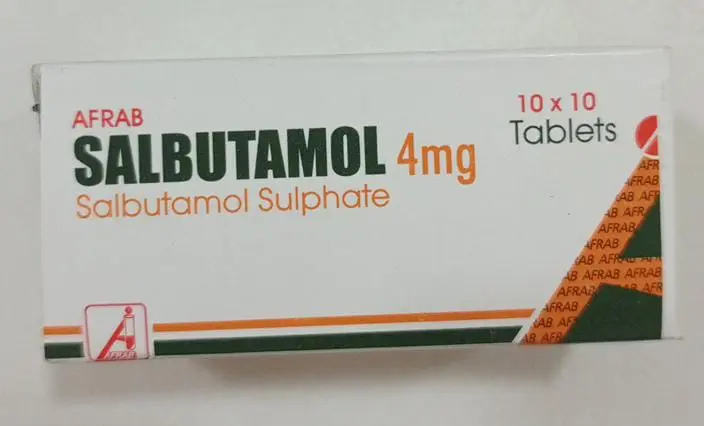
Afrab Salbutamol Tabs
What is Salbutamol? Salbutamol tablets are a bronchodilator — a medicine that relaxes and widens the airways in the lungs, making it easier to breathe. They are used to treat and prevent breathing difficulties caused by asthma, chronic obstructive pulmonary disease (COPD), and other conditions that cause airway narrowing. Salbutamol belongs to a class of medicines called beta-2 agonists and works by stimulating receptors in the airway muscles, causing them to relax and open up within minutes.
What It Treats
- Asthma attacks and chronic asthma management
- Chronic Obstructive Pulmonary Disease (COPD)
- Bronchospasm – sudden tightening of the airways
- Exercise-induced breathing difficulty
- Wheezing and chest tightness
- Chronic bronchitis and emphysema-related breathlessness
Dosage Guide
| Patient Group | Dose | Frequency |
|---|---|---|
| Adults | 2mg – 4mg | 3 to 4 times daily |
| Elderly patients | Start at 2mg | 3 to 4 times daily |
| Children 6–12 years | 2mg | 3 to 4 times daily |
| Children 2–6 years | 1mg – 2mg | 3 to 4 times daily |
Doses may be increased by a doctor up to 8mg three to four times daily if needed. Always follow your doctor's prescribed dose. Do not self-adjust without medical guidance.
Why Choose Salbutamol Tablets?
- Effective bronchodilator – clinically proven to open airways
- Suitable for those who struggle with inhalers – ideal for young children or patients with poor inhaler technique
- Available in two strengths – 2mg and 4mg for flexible dosing
- Can be taken with food – reduces risk of stomach upset
- WHO essential medicine – trusted and used worldwide
- Covers multiple conditions – asthma, COPD, and bronchospasm
Important Warnings – Read Before Use
Heart conditions – Use with caution if you have heart disease, high blood pressure, or irregular heartbeat (arrhythmia)
Diabetes – Salbutamol can raise blood sugar levels; monitor closely if diabetic
Overactive thyroid (hyperthyroidism) – Use cautiously under medical supervision
Low potassium – High doses may lower potassium levels in the blood
Pregnancy & breastfeeding – Consult your doctor before use; may be used if benefit outweighs risk
Do not suddenly stop – Always follow your doctor's guidance on stopping or reducing the dose
Who Should Avoid Salbutamol Tablets?
- People with known hypersensitivity or allergy to salbutamol
- Patients with certain heart rhythm disorders (without medical supervision)
- Children under 2 years without a doctor's prescription
Possible Side Effects Salbutamol tablets are generally safe when taken as directed. Common side effects include:
- Trembling or shakiness (most common, usually mild)
- Headache
- Increased heart rate (palpitations)
- Muscle cramps
- Nervousness or restlessness
Serious but rare side effects include chest pain, irregular heartbeat, or a significant drop in potassium. Seek immediate medical attention if these occur.
Drug Interactions Inform your doctor or pharmacist if you are taking:
- Beta-blockers (e.g. propranolol) – may reduce salbutamol's effectiveness
- Diuretics (water tablets) – may increase risk of low potassium
- Digoxin – salbutamol may affect digoxin levels
- Other bronchodilators – risk of increased side effects
- MAO inhibitors or tricyclic antidepressants – increased risk of cardiovascular effects
Storage Instructions
- Store below 25°C in a cool, dry place
- Keep away from direct sunlight and moisture
- Keep out of reach of children
- Do not use after the expiry date printed on the pack