
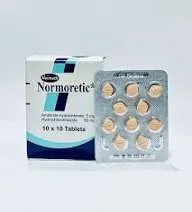
Normoretic (Amiloride Hydrochloride 5mg + Hydrochlorothiazide 50mg) Tablets
What is Normoretic? Normoretic is a prescription fixed-dose combination diuretic tablet containing Amiloride Hydrochloride 5 mg and Hydrochlorothiazide (HCTZ) 50 mg. It is prescribed to treat high blood pressure (hypertension) and fluid retention (oedema) in adults. What makes Normoretic particularly valuable is its potassium-balancing design — the Amiloride component counteracts the potassium depletion that Hydrochlorothiazide alone typically causes, making it a safer and more complete diuretic option for patients who need sustained fluid and blood pressure management without the risk of low potassium level.
What is Normoretic used for? Normoretic is indicated for the treatment of hypertension, either as a standalone antihypertensive or as part of a broader combination regimen when a single medicine is insufficient. It is also indicated for oedema — fluid accumulation and swelling — caused by congestive heart failure, hepatic cirrhosis (liver disease with fluid build-up in the abdomen), and chronic kidney conditions. It is especially well-suited for patients who require a thiazide diuretic but have a history of or are at risk for low potassium, or those taking digoxin or other medicines where potassium stability is clinically important.
How to take Normoretic Take Normoretic exactly as prescribed by your doctor. The usual starting dose for most adults is one tablet once daily, taken in the morning with food to reduce the likelihood of stomach upset and to ensure the increased urination occurs during waking hours rather than at night. In some cases, your doctor may prescribe up to two tablets per day, taken as a single dose or split into morning and midday doses. Always follow your doctor's specific instructions. Take with food consistently — it helps absorption and reduces gastrointestinal discomfort. Do not take a dose late in the day to avoid nighttime urination disrupting your sleep.
Common side effects The most important side effect to watch for with Normoretic is high potassium (hyperkalaemia) — the opposite problem to that seen with HCTZ alone. Symptoms include muscle weakness, irregular heartbeat, tingling or numbness, and unusual fatigue. Other commonly reported side effects include dizziness, nausea, headache, dry mouth, increased thirst, skin sensitivity to sunlight (photosensitivity), and increased frequency of urination, particularly in the first few days of treatment. Report any signs of muscle weakness, palpitations, or significant swelling to your doctor promptly.
Who should not take Normoretic? Normoretic is contraindicated in patients with already elevated potassium levels (hyperkalaemia), severe kidney impairment or renal failure, anuria (absent urine output), Addison's disease (adrenal insufficiency), and known allergy to sulfonamide-derived medicines. Special care is required in patients with diabetes (HCTZ can raise blood sugar), gout (HCTZ can raise uric acid), liver cirrhosis, and elderly patients who may be more sensitive to electrolyte changes. It is not recommended during pregnancy or breastfeeding.
Storage Store below 30°C in a dry place, away from direct sunlight and moisture. Keep in the original packaging and out of reach of children. Do not use beyond the expiry date printed on the pack.
Why buy from Amkamed Pharmaceuticals? We dispense only genuine, manufacturer-sealed medications through a verified pharmaceutical supply chain. A valid prescription is required to purchase Normoretic.