
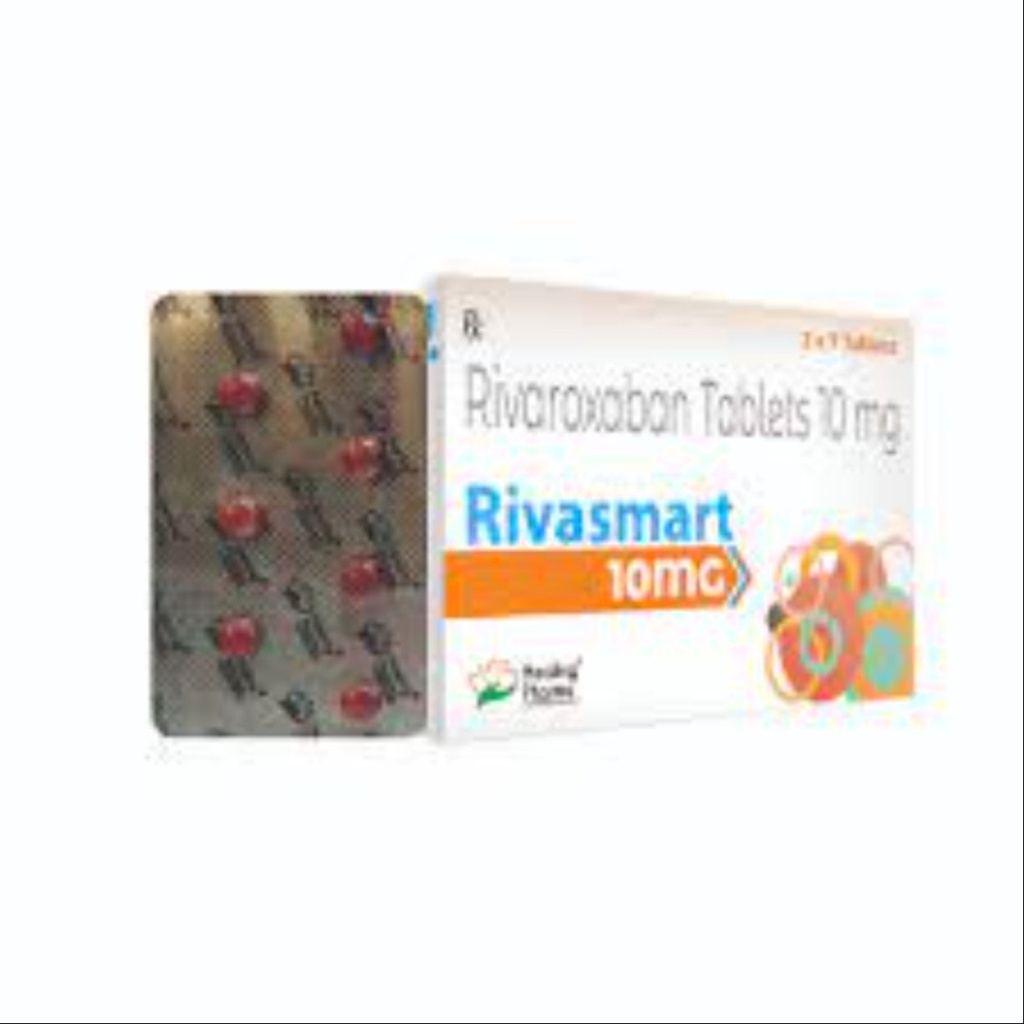
Rivasmart (Rivaroxaban) 10mg Tablets
Composition:
Each tablet of Rivasmart contains:
- Rivaroxaban: 10 mg
Indications:
Rivasmart (Rivaroxaban) is indicated for:
- Prevention of venous thromboembolism (VTE) in patients undergoing hip or knee replacement surgery.
- Treatment of deep vein thrombosis (DVT) and pulmonary embolism (PE).
- Prevention of recurrent DVT and PE.
- Reduction of the risk of stroke and systemic embolism in patients with non-valvular atrial fibrillation.
- Treatment of VTE in patients with cancer (as per specific guidelines).
Dosing:
For VTE Prophylaxis in Surgery:
- 10 mg orally once daily, starting 1 to 2 days after surgery, for a duration of 10 to 14 days (knee replacement) or 35 days (hip replacement).
For Treatment of DVT/PE:
- Initial dose: 15 mg orally twice daily for the first 21 days.
- Maintenance dose: 20 mg orally once daily thereafter.
For Non-valvular Atrial Fibrillation:
- 20 mg orally once daily (or 15 mg once daily in patients with renal impairment).
Precautions:
- Bleeding Risk: Rivaroxaban increases the risk of bleeding. Monitor patients for signs and symptoms of bleeding, especially in those with a history of bleeding disorders or those taking other anticoagulants.
- Renal Impairment: Use with caution in patients with renal impairment. Adjust dosing as necessary based on renal function.
- Liver Impairment: Avoid use in patients with severe hepatic impairment or active liver disease associated with coagulopathy.
- Pregnancy and Lactation: Use during pregnancy only if the potential benefit justifies the potential risk to the fetus. Caution is advised when administering to nursing mothers.
- Drug Interactions: Be aware of potential interactions with other medications, particularly those that affect hemostasis (e.g., NSAIDs, antiplatelet agents).
- Discontinuation: If surgery or invasive procedures are planned, consider discontinuing Rivaroxaban at least 24 hours prior to the procedure to reduce the risk of bleeding.
Note: This information is intended for healthcare professionals and should be used in conjunction with clinical judgment and individual patient assessment.
8,250.00 ₦
8,250.00 ₦