
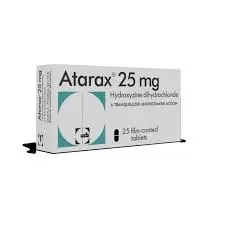
Atarax 25mg Tablets
What is Atarax 25mg? Atarax 25mg contains Hydroxyzine Hydrochloride, a first-generation antihistamine with multiple therapeutic uses. Unlike many antihistamines used solely for allergies, Atarax is uniquely effective for anxiety and tension, itching (pruritus), and allergic skin conditions. It works on the central nervous system to produce a calming effect while simultaneously blocking histamine — the chemical responsible for allergic reactions and skin itching.
Atarax has been clinically trusted for over 60 years and remains one of the most versatile prescription medicines in its class — used by doctors in psychiatry, dermatology, and general medicine alike.
What It Treats
- Anxiety & emotional tension – short-term relief of generalised anxiety
- Pre-operative sedation – calms patients before surgery or medical procedures
- Chronic itching (pruritus) – from eczema, dermatitis, or allergic skin reactions
- Urticaria (hives) – raised, itchy welts caused by allergic responses
- Contact dermatitis – allergic or irritant skin inflammation
- Alcohol withdrawal support – helps manage withdrawal symptoms under medical supervision
- Insomnia associated with anxiety – promotes sleep onset in anxious patients
- Nausea and vomiting – used as an adjunct in some settings
How It Works Atarax (Hydroxyzine) works through three key mechanisms:
1. Antihistamine Action Blocks H1 histamine receptors in the skin and body — reducing itching, redness, and swelling caused by allergic reactions.
2. Anxiolytic (Anti-Anxiety) Action Acts on the subcortical area of the brain (below the cortex) to suppress activity in key emotional centres — producing a calming, sedating effect without the addiction risk associated with benzodiazepines like diazepam.
3. Anticholinergic Action Reduces certain nerve signals that contribute to nausea, muscle spasm, and secretions — adding to its versatility across multiple conditions.
Dosage Guide
| Indication | Adults | Children (6–12 yrs) | Children (under 6) |
|---|---|---|---|
| Anxiety / Tension | 25mg – 100mg | Not first choice | Not recommended |
| Itching / Allergies | 25mg – 50mg | 10mg – 25mg | 5mg – 15mg |
| Pre-op Sedation | 50mg – 100mg | 0.6mg/kg body weight | As directed by doctor |
| Insomnia (anxiety-related) | 25mg – 50mg at night | Not recommended | Not recommended |
All doses should be taken 3 to 4 times daily unless prescribed otherwise. Always follow your doctor's prescribed dose. Do not exceed 100mg per dose or 400mg per day in adults.
Why Choose Atarax 25mg?
- Triple action – tackles anxiety, itching, and allergic reactions in one tablet
- Non-addictive – safer alternative to benzodiazepines for short-term anxiety
- Fast-acting – calming and antipruritic effects begin within 30 to 60 minutes
- Clinically proven – over 60 years of trusted use worldwide
- Versatile – used across psychiatry, dermatology, and general medicine
- Available in multiple forms – tablets and syrup for flexible dosing
- No dependency risk – does not cause physical addiction with normal use
- Effective for pre-procedure anxiety – widely used before surgeries and dental procedures
Who Should Avoid Atarax 25mg?
- Patients with known allergy to hydroxyzine or cetirizine
- Patients with prolonged QT interval or serious heart arrhythmias
- Women in the first trimester of pregnancy
- Breastfeeding mothers
- Patients with porphyria (a rare metabolic disorder)
- Children under 1 year without specialist medical guidance
Possible Side Effects Atarax is generally well tolerated. Most side effects are related to its sedating nature.
Common:
- Drowsiness and sedation (most frequent — often the intended effect)
- Dry mouth
- Dizziness
- Headache
- Blurred vision
Less Common:
- Constipation
- Difficulty urinating
- Confusion (especially in elderly)
- Skin rash
Rare but Serious — Seek Immediate Medical Help:
- Irregular or rapid heartbeat (palpitations)
- Seizures
- Severe allergic reaction (anaphylaxis) — rash, swelling of face/throat, difficulty breathing
- Severe skin reactions (blistering, peeling)
Drug Interactions Tell your doctor or pharmacist if you are taking:
- Other sedatives or sleeping tablets – risk of excessive drowsiness and respiratory depression
- Opioid painkillers (e.g. tramadol, codeine) – dangerous sedation when combined
- Benzodiazepines (e.g. diazepam, lorazepam) – additive CNS depression
- Antidepressants (especially MAO inhibitors and tricyclics) – increased anticholinergic effects
- Antifungals or antibiotics (e.g. fluconazole, azithromycin) – may prolong QT interval
- Anticonvulsants – hydroxyzine may alter seizure thresholds
- Anticholinergic drugs – additive effects including dry mouth, urinary retention, constipation
- Store below 25°C in a cool, dry place
- Protect from direct sunlight and humidity
- Keep out of reach of children
- Do not use after the expiry date printed on the packaging
Storage Instructions