
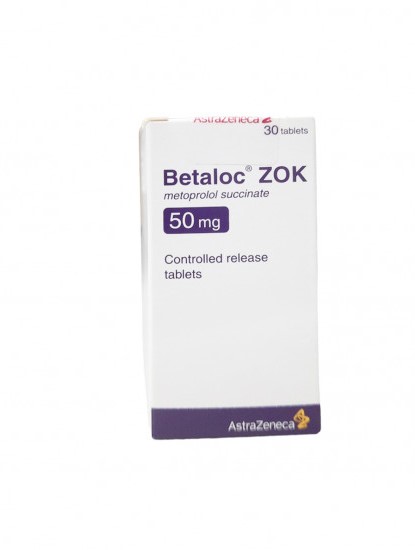
Betaloc ZOK 50mg (Metoprolol Succinate) Tablets
Brand name : Betaloc ZOK
Active ingredient : Metoprolol succinate 50mg
Formulation : Extended-release (XL/ZOK)
Requires prescription : Yes
What makes Betaloc ZOK different from regular metoprolol?
Standard metoprolol tartrate (immediate-release) is absorbed quickly, peaks within 1–2 hours, then drops — requiring multiple daily doses and causing fluctuations in heart rate and blood pressure. Betaloc ZOK uses a patented extended-release matrix (the "ZOK" technology) that releases metoprolol succinate slowly and continuously over 24 hours.
| Regular metoprolol tartrate | Betaloc ZOK (succinate) | |
|---|---|---|
| Release type | Immediate | Extended (24-hour) |
| Doses per day | 2–3 times daily | Once daily |
| Drug level stability | Peaks and troughs | Smooth and steady |
| Heart failure approved | No | Yes |
| Side effect profile | More variable | Better tolerated |
The ZOK extended-release technology is the key reason Betaloc ZOK is clinically preferred over standard metoprolol for heart failure, angina, and long-term hypertension management — providing protection around the clock, including during the critical early morning hours when cardiovascular events are most common.
How does Betaloc ZOK work?
Metoprolol succinate selectively blocks beta-1 adrenergic receptors in the heart — the receptors that respond to adrenaline and stress hormones. By blocking these, it slows the heart rate, reduces the force and oxygen demand of each heartbeat, lowers blood pressure, and stabilises abnormal heart rhythms. The extended-release matrix ensures this effect is delivered continuously over 24 hours.
Slower heart rate
Lower blood pressure
Steadier heart rhythm
Less cardiac workload
What is Betaloc ZOK 50mg used for?
High blood pressure (hypertension)
Delivers smooth, consistent blood pressure reduction over 24 hours — particularly effective at blunting the early morning surge in blood pressure that is associated with the highest risk of stroke and heart attack.
Stable angina (chest pain)
Reduces the heart's oxygen demand by slowing the heart rate, significantly reducing the frequency and severity of angina episodes and improving exercise tolerance.
Chronic heart failure (CHF)
One of only three beta-blockers clinically proven to reduce mortality in chronic heart failure. Betaloc ZOK (metoprolol succinate) is specifically approved for heart failure — the immediate-release tartrate form is not. It is initiated at low doses and gradually increased under specialist supervision.
Irregular heartbeat (arrhythmia)
Controls heart rate in atrial fibrillation (AF), supraventricular tachycardia (SVT), and other rhythm disorders — stabilising the heart without the peaks and troughs of immediate-release formulations.
After a heart attack (secondary prevention)
Prescribed following a myocardial infarction to protect the recovering heart, reduce the risk of a second heart attack, and improve long-term survival by lowering cardiac workload.
Dosage & how to take
| Hypertension / angina | 50mg–200mg once daily |
| Heart failure (starting dose) | 12.5mg–25mg once daily — titrated up slowly under supervision |
| When to take | Morning, at the same time each day |
| With or without food | Can be taken either way — swallow whole with water |
| Can the tablet be crushed? | No — must be swallowed whole to preserve the extended-release mechanism. Do not crush, chew, or split. |
| Missed dose | Take as soon as you remember; skip if nearly time for the next dose. Never double up. |
Never stop Betaloc ZOK suddenly — abrupt withdrawal can cause a dangerous rebound rise in heart rate and blood pressure, and may trigger a heart attack or worsening angina. Always reduce the dose gradually under your doctor's supervision over 1–2 weeks.
Who should not take Betaloc ZOK?
Key things to know before buying
Common side effects
Because of the extended-release formulation, side effects with Betaloc ZOK tend to be milder and less frequent than with immediate-release metoprolol. Most settle within the first 1–2 weeks. Contact your doctor if your heart rate drops very low, you feel significantly breathless, or experience chest tightness.