
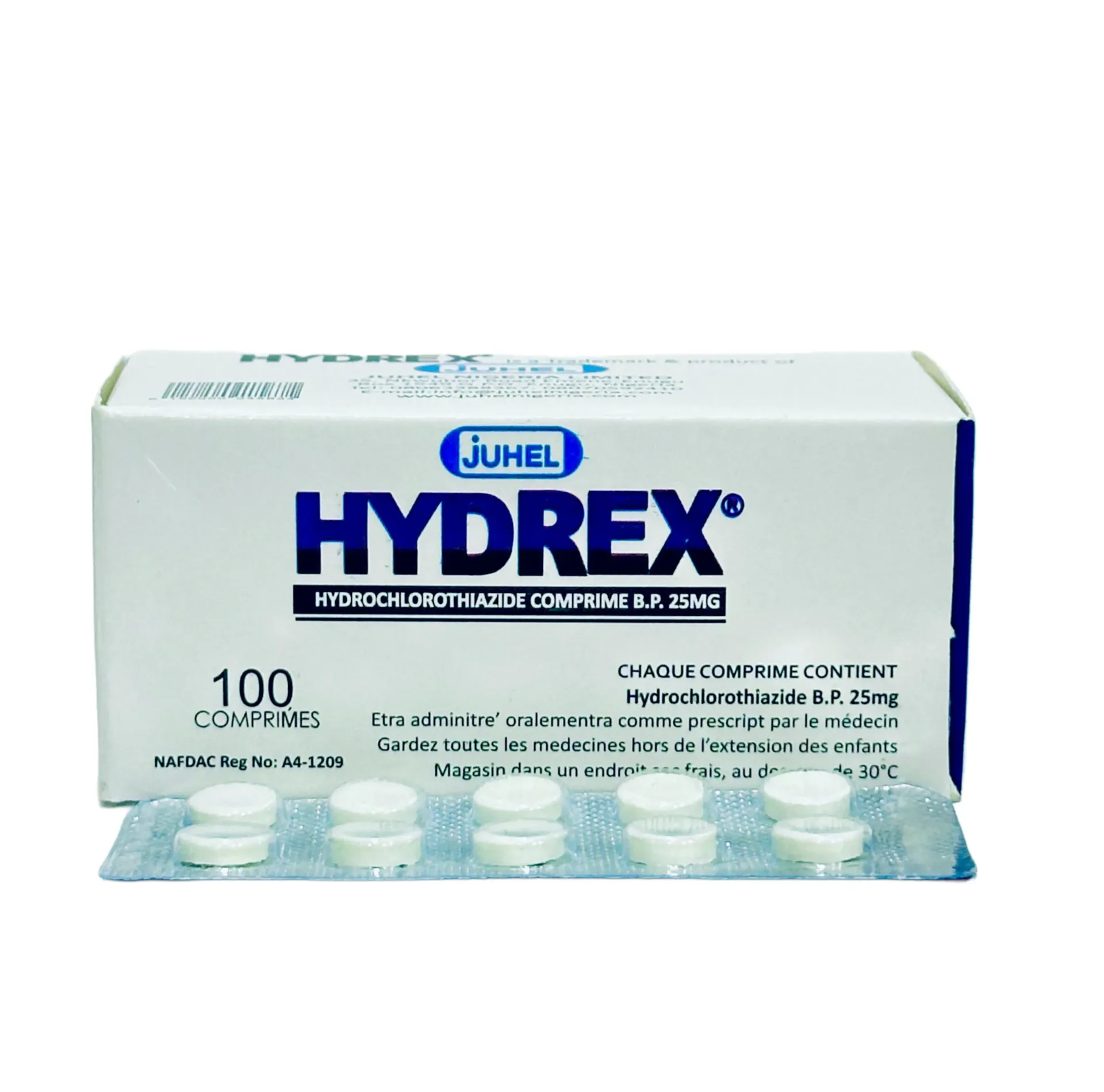
Hydrex (Hydrochlorothiazide) 25mg
It is one of the oldest and most widely prescribed blood pressure medicines in the world — often used alone or combined with other antihypertensives for better control.
How it works
Removes excess fluid
Kidneys excrete more salt and water in urine
Reduces blood volume
Less fluid in vessels means less pressure on artery walls
Lowers blood pressure
Sustained reduction in both systolic and diastolic readings
Dosage : 25 mg once daily
Dosage form: Oral tablet
Drug class : Thiazide Diuretic
Prescription : Required
What it's used for
High blood pressure (hypertension) — used alone or alongside other blood pressure medicines
Oedema (fluid retention) — reduces swelling caused by heart failure, liver cirrhosis, or kidney problems
Combination therapy — frequently paired with ACE inhibitors, ARBs, or beta-blockers for enhanced blood pressure control
Kidney stones — helps reduce calcium in urine, lowering the risk of calcium-type kidney stones in susceptible patients
How to take it
Take one tablet by mouth once daily, preferably in the morning with or without food. Taking it in the morning helps avoid frequent urination disrupting your sleep at night. Swallow whole with a glass of water.
You will likely urinate more frequently in the first few hours after taking this tablet — this is normal and expected. The effect settles down with regular use.
Common side effects
Most side effects relate to the diuretic action of the tablet and are manageable. These may include:
Low potassium is the most clinically important side effect. Your doctor may recommend potassium-rich foods (e.g. bananas, oranges) or periodic blood tests to monitor electrolyte levels during treatment.
Who should not take Hydrochlorothiazide 25 mg
People allergic to sulfonamide-derived medicines or to HCTZ itself
Patients with severely reduced kidney or liver function
Patients with very low potassium (hypokalaemia) or very low sodium (hyponatraemia)
Pregnant women — especially in the second and third trimester; may affect the unborn baby
Patients with gout — HCTZ can raise uric acid levels and trigger attacks
Patients with uncontrolled diabetes — may worsen blood sugar control
Important medicines to tell your doctor about
If taking cholestyramine or colestipol (bile acid resins), take HCTZ at least 1 hour before or 4 hours after to avoid reduced absorption.
Helpful tips while on this medicine
Stay well hydrated — drink adequate water throughout the day to replace fluids lost through increased urination
Use sunscreen outdoors — HCTZ can increase skin sensitivity to sunlight (photosensitivity)
Eat potassium-rich foods such as bananas, sweet potatoes, and leafy greens to help maintain electrolyte balance
Reduce salt intake — a low-sodium diet enhances the blood pressure-lowering effect of this medicine
Storage
Store below 25°C in a cool, dry place away from direct light and moisture. Keep out of reach of children.