
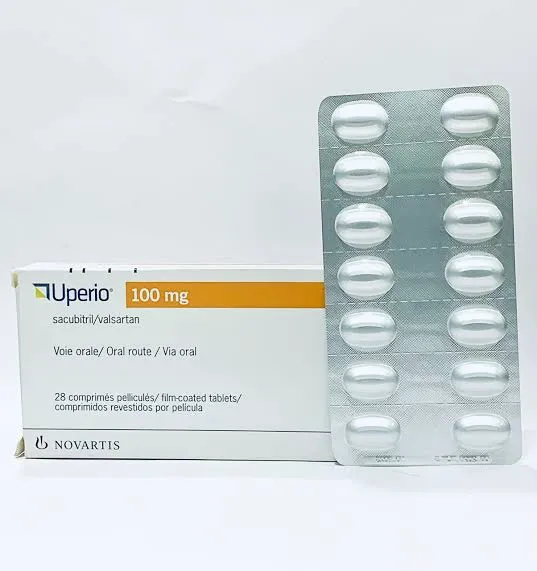
Uperio (Valsartan) 100mg Tablets
What is Valsartan 100mg?
Valsartan 100mg is a widely prescribed, well-established ARB (Angiotensin II Receptor Blocker) — one of the most trusted classes of medicines for managing high blood pressure, heart failure, and protecting the heart after a heart attack. It works by blocking a powerful hormone called angiotensin II that tightens blood vessels and strains the heart, allowing blood to flow more freely and the heart to pump with less effort.
Valsartan works by blocking angiotensin II, a powerful blood pressure regulator that narrows blood vessels, affects the production and release of aldosterone, stimulates the heart, and promotes sodium reabsorption by the kidneys. Valsartan blocks angiotensin II from binding to the AT1 receptor in many tissues such as blood vessel smooth muscle and the adrenal gland, lowering blood pressure.
One of Valsartan's most appreciated advantages over older blood pressure medicines — particularly ACE inhibitors like Ramipril and Enalapril — is that it does not cause the persistent dry cough that forces many patients to switch medications. For patients who need effective RAAS blockade without the cough, Valsartan is often the medicine of choice.
What is Valsartan 100mg Used For?
- High Blood Pressure (Hypertension) — Valsartan is used alone or together with other medicines to treat high blood pressure. High blood pressure adds to the workload of the heart and arteries. If it continues for a long time, the heart and arteries may not function properly — this can damage the blood vessels of the brain, heart, and kidneys, resulting in a stroke, heart failure, or kidney failure. Lowering blood pressure can reduce the risk of strokes and heart attacks.
- Heart Failure (NYHA Class II–IV) — Valsartan is indicated for the treatment of heart failure (NYHA class II–IV). It helps reduce the symptoms of heart failure — breathlessness, fatigue, fluid retention — and lowers the risk of hospital admission due to worsening heart failure.
- Post-Heart Attack (Myocardial Infarction) Protection — Valsartan is indicated to reduce cardiovascular mortality in clinically stable patients with left ventricular failure or left ventricular dysfunction following myocardial infarction. Valsartan may be initiated as early as 12 hours after a myocardial infarction, and may be given with other standard post-myocardial infarction treatment, including thrombolytics, aspirin, beta-blockers, and statins.
- Left Ventricular Dysfunction — Valsartan is also used to treat left ventricular failure after a heart attack — a condition where the left side of the heart (the main pumping chamber) becomes stiff and enlarged or swollen.
How to Take Valsartan 100mg
For Hypertension:
- The usual starting dose for adults is 80mg to 160mg once daily, with 100mg being a common maintenance dose.
- The maximum dose for hypertension is 320mg once daily if blood pressure remains uncontrolled.
- Valsartan is typically taken once daily — making it one of the most convenient blood pressure medicines available.
For Heart Failure:
- The initial dose for heart failure is 20mg orally twice daily. The initial dosage may be titrated upward within 7 days to 40mg twice daily, with subsequent titrations to a target maintenance dose of 160mg twice a day as tolerated by the patient.
For Post-Heart Attack:
- The initial dose is 20mg orally twice daily, titrated upward within 7 days to 40mg twice daily, with subsequent titrations to a target maintenance dose of 160mg twice a day. If symptomatic hypotension or renal dysfunction occurs, consideration should be given to a dosage reduction.
General Instructions:
- Can be taken with or without food — food does not significantly affect how Valsartan is absorbed.
- Take at the same time every day for the best and most consistent results.
- Swallow the tablet whole with a full glass of water.
- Do not stop taking Valsartan without consulting your healthcare provider first. Stopping abruptly may cause blood pressure to rise rapidly.
- Your doctor will arrange regular blood tests to monitor kidney function and potassium levels throughout treatment.
Common Side Effects
Valsartan 100mg is generally very well tolerated — particularly compared to ACE inhibitors. Most people experience few or no side effects.
Common side effects may include:
- Dizziness or lightheadedness — especially when standing up quickly from sitting or lying down
- Headache — usually mild and settles as the body adjusts
- Fatigue or tiredness
- Mild nausea or stomach discomfort
For patients taking Valsartan for heart failure, also watch for:
- Symptoms of high blood potassium, such as heart rhythm problems, muscle weakness, and slow heart rate
- Low blood pressure — particularly at the start of therapy or after dose increases
Seek immediate medical attention if you experience:
- Swelling of the face, lips, tongue, or throat — rare but serious allergic reaction (angioedema)
- Significant drop in urine output — possible sign of kidney problems
- Severe dizziness, fainting, or near-collapse
- Irregular or very slow heartbeat
- Persistent muscle weakness or cramps
Prescription Required
Valsartan 100mg is a prescription-only medicine. Please upload a valid prescription or consult your doctor before purchasing. Our licensed pharmacists are available to answer any questions about your blood pressure or heart failure treatment.