
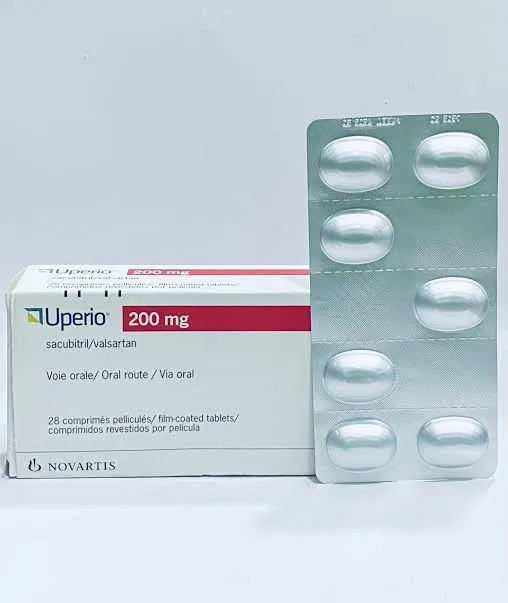
Uperio (Valsartan) 200mg Tablets
What is Valsartan 200mg?
Valsartan 200mg is the higher-strength formulation of one of the world's most widely prescribed and clinically proven ARB (Angiotensin II Receptor Blocker) medicines. While lower doses of Valsartan are used to initiate treatment, the 200mg strength represents the established, optimised therapeutic dose — the target many patients are titrated up to once their body has adjusted and their doctor has confirmed that higher-level RAAS blockade is needed for adequate blood pressure control, heart failure management, or post-heart attack protection.
Valsartan is an angiotensin II receptor blocker (ARB) that may be used to treat high blood pressure or reduce the risk of being admitted to the hospital if you have heart failure.
At 200mg, Valsartan delivers near-maximum ARB receptor blockade — providing powerful, sustained protection to the heart, kidneys, and blood vessels throughout the entire 24-hour dosing period. It is the dose at which many of the landmark clinical trials demonstrating Valsartan's cardiovascular and renal benefits were conducted.
What is Valsartan 200mg Used For?
- High Blood Pressure (Hypertension) — Valsartan is used alone or together with other medicines to treat high blood pressure. High blood pressure adds to the workload of the heart and arteries. If it continues for a long time, the heart and arteries may not function properly — this can damage the blood vessels of the brain, heart, and kidneys, resulting in a stroke, heart failure, or kidney failure. Lowering blood pressure can reduce the risk of strokes and heart attacks. At 200mg, Valsartan is used when lower doses have not achieved adequate blood pressure control, either alone or in combination with other antihypertensive agents.
- Heart Failure (NYHA Class II–IV) — Valsartan is indicated for the treatment of heart failure (NYHA class II–IV). The 200mg twice-daily dose represents the target maintenance dose for heart failure — the dose at which the full clinical benefits demonstrated in the Val-HeFT trial were achieved, including reduced hospitalisation rates and improved symptoms.
- Post-Heart Attack (Left Ventricular Dysfunction) — Valsartan is indicated to reduce cardiovascular mortality in clinically stable patients with left ventricular failure or left ventricular dysfunction following myocardial infarction. Patients who have suffered a heart attack complicated by left ventricular dysfunction are titrated up to 160mg twice daily — with 200mg representing the established effective range of high-dose Valsartan therapy in this setting.
- Left Ventricular Dysfunction After Heart Attack — Valsartan is used to treat left ventricular failure after a heart attack — left ventricular failure occurs when the left side of the heart (the main pumping chamber) becomes stiff and enlarged or swollen. High-dose Valsartan therapy helps reverse harmful cardiac remodelling and reduces the risk of the heart deteriorating further after a serious cardiac event.
How to Take Valsartan 200mg
For Hypertension:
- Valsartan 200mg is taken once daily — at the same time each day.
- It is typically reached after gradual titration from a starting dose of 80mg–160mg, increased as blood pressure response and tolerability are assessed.
- The maximum approved dose for hypertension is 320mg once daily.
For Heart Failure:
- The target maintenance dose for heart failure is 160mg twice a day as tolerated by the patient. If symptomatic hypotension or renal dysfunction occurs, consideration should be given to a dosage reduction.
- The 200mg tablet is used as part of this high-dose heart failure maintenance regimen — providing the sustained RAAS blockade needed for meaningful clinical benefit.
For Post-Heart Attack Protection:
- Valsartan may be initiated as early as 12 hours after a myocardial infarction, titrated upward within 7 days, with subsequent titrations to a target maintenance dose of 160mg twice a day.
- The 200mg tablet supports dosing at this established upper therapeutic range under cardiologist supervision.
General Instructions:
- Can be taken with or without food — absorption is not significantly affected by meals.
- Take at the same time every day — consistency of timing ensures consistent blood pressure control throughout the day.
- Swallow the tablet whole with a full glass of water — do not crush or chew.
- Do not stop taking Valsartan without consulting your healthcare provider first. Stopping abruptly can cause blood pressure to rebound rapidly.
- Keep up your fluid intake — not enough fluids, excessive perspiration, diarrhoea, or vomiting can lead to an excessive fall in blood pressure. If you experience any of these, contact your doctor promptly.
- Your doctor will schedule regular blood tests to monitor kidney function, potassium levels, and blood pressure response throughout treatment.
Common Side Effects
Common side effects may include:
- Dizziness or lightheadedness — especially when standing up quickly; more common at the start of treatment or after a dose increase
- Headache — usually mild and settles as the body adjusts
- Fatigue or tiredness
- Mild nausea or abdominal discomfort
For patients taking Valsartan for heart failure, also watch for:
- Symptoms of high blood potassium, such as heart rhythm problems, muscle weakness, and slow heart rate
- Low blood pressure (hypotension) — particularly at the start of therapy, after dose increases, or during periods of dehydration
For patients taking Valsartan post-heart attack, side effects may include:
- Dizziness and low blood pressure — more common in this patient group; dose reduction may be needed if significant
- Changes in kidney function — monitoring is essential particularly in the first weeks of treatment
Seek immediate medical attention if you experience:
- Sudden swelling of the face, lips, tongue, or throat — rare but serious angioedema reaction; stop the medication and get emergency help immediately
- Significantly reduced urination or no urine output — possible sign of acute kidney injury
- Severe dizziness, near-fainting, or collapse
- Rapid, slow, or very irregular heartbeat
- Muscle weakness, cramps, or numbness — possible signs of electrolyte imbalance
Key Drug Interactions
Always inform your doctor and pharmacist about every medicine, supplement, or herbal product you are taking.
Prescription Required
Valsartan 100mg is a prescription-only medicine. Please upload a valid prescription or consult your doctor before purchasing. Our licensed pharmacists are available to answer any questions about your blood pressure or heart failure treatment.