
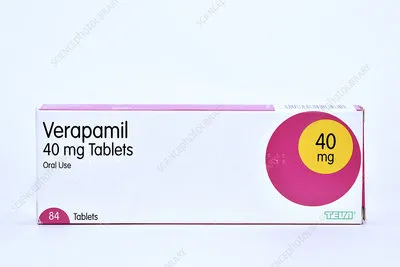
Verapamil 40mg Tablets Teva
What is Verapamil 40mg?
Verapamil 40mg is a versatile, well-established prescription calcium channel blocker with a uniquely broad range of cardiovascular applications. Unlike most other calcium channel blockers — which work primarily on blood vessels — Verapamil has a powerful dual action: it relaxes and widens blood vessels AND directly slows and steadies the heart's electrical activity. This makes it one of the very few medicines that can simultaneously manage high blood pressure, chest pain (angina), AND abnormal heart rhythms (arrhythmias) — a triple cardiovascular benefit in a single medicine.
Verapamil is used alone or together with other medicines to treat heart rhythm problems, severe chest pain (angina), or high blood pressure (hypertension).
The 40mg tablet represents the lowest oral dose of Verapamil — making it an ideal starting point for patients being introduced to Verapamil therapy, for elderly patients who need a gentler approach, and for dose titration under medical supervision before stepping up to higher strengths.
What is Verapamil 40mg Used For?
FDA-Approved Indications:
- High Blood Pressure (Hypertension) — Verapamil is used alone or together with other medicines to treat high blood pressure. High blood pressure adds to the workload of the heart and arteries. If it continues for a long time, the heart and arteries may not function properly — this can damage the blood vessels of the brain, heart, and kidneys, resulting in a stroke, heart failure, or kidney failure. Verapamil is particularly well-suited for hypertension patients who also have atrial fibrillation or other arrhythmias — managing both conditions simultaneously.
- Chronic Stable Angina (Chest Pain Prevention) — FDA-approved indications for Verapamil include angina — chronic stable, vasospastic or Prinzmetal variant, and unstable angina (crescendo, preinfarction). By slowing the heart rate and reducing the heart's oxygen demand, Verapamil significantly reduces both the frequency and severity of angina attacks — allowing patients to exercise more and live more actively.
- Supraventricular Arrhythmias (Abnormal Fast Heart Rhythms) — Verapamil is used to treat hypertension, angina, and certain heart rhythm disorders. The immediate-release tablets are also used alone or with other medications to prevent and treat irregular heartbeats. Specifically, Verapamil is used for:
- Supraventricular Tachycardia (SVT) — episodes of sudden very fast heartbeat originating above the ventricles
- Paroxysmal SVT (PSVT) Prophylaxis — preventing recurrent episodes of sudden rapid heartbeat
- Atrial Fibrillation / Atrial Flutter — Rate Control — Verapamil is used for controlling ventricular rate in supraventricular tachycardia and is more effective than Digoxin in controlling ventricular rate. It slows the number of electrical impulses passing through the AV node to the ventricles, keeping the heart rate at a safe, manageable level.
How to Take Verapamil 40mg
- The starting dose is 80mg taken three times per day (240mg per day). The 40mg tablet is therefore used as a low starting dose for sensitive patients, the elderly, or those with liver or kidney impairment — typically taken two to three times daily under doctor's direction.
- An initial reduced dosage may be warranted in patients who may have an increased response to lower doses, such as elderly patients.
- Take with or without food — food does not significantly affect absorption of immediate-release Verapamil.
- Take at evenly spaced intervals throughout the day — typically 3 times daily for the immediate-release tablet.
- Take at the same times each day — consistency helps maintain stable blood levels and steady heart rate control.
- Never stop Verapamil suddenly without consulting your doctor — abrupt discontinuation can cause rebound worsening of angina, blood pressure, or heart rhythm problems.
- Your doctor will monitor your heart rate, blood pressure, and ECG particularly during the initiation and titration phases of treatment.
Common Side Effects
Common side effects include headache and constipation. Serious side effects are rare but can include low blood pressure or liver problems. Notify your healthcare provider right away if you have dizziness or feel lightheaded.
Seek emergency medical help immediately if you experience:
- Chest pain, severe palpitations, or irregular heartbeat — particularly any new or worsening arrhythmia
- Sudden severe dizziness, fainting, or loss of consciousness
- Severe shortness of breath, inability to lie flat — possible acute heart failure
- Signs of allergic reaction: hives, swelling of face, lips, tongue, or throat, difficulty breathing
Key Drug Interactions
Always tell your doctor and pharmacist about every medicine, supplement, or herbal product you take.
Prescription Required
Verapamil 40mg is a prescription-only medicine. Please upload a valid prescription or consult your doctor before purchasing. Our licensed pharmacists are available to answer any questions about your blood pressure, heart rhythm, or angina treatment.